Key takeaways
- Water damage restoration in Baytown usually follows the same order: stop the source, remove standing water, dry the structure, then repair.
- The EPA advises drying wet areas and items within 24 to 48 hours to prevent mold growth, so speed matters more than anything else.
- In Baytown humidity, opening windows often slows drying. Closed-up drying with dehumidifiers works better.
- We do not do the work. Calling connects you with an independent local restoration company, and you decide whether to hire them.
If you are looking for water damage restoration in Baytown, you are probably standing in a wet room right now, so this page gets to the point. Below is what a proper cleanup involves, how long drying tends to take in our climate, and what to ask the company that shows up. If you would rather talk to someone, the number on this page routes you to an independent restoration company that serves the Baytown area.
How this works: Baytown Fire and Water Restoration is a referral line, not a contractor. We connect you by phone with an independent local company. They inspect, quote and do the work, and you are free to say no.
What water damage restoration in Baytown usually involves
Restoration companies do not all work the same way, but a competent job follows a predictable order. Knowing it helps you tell whether the crew in your living room is doing things properly.
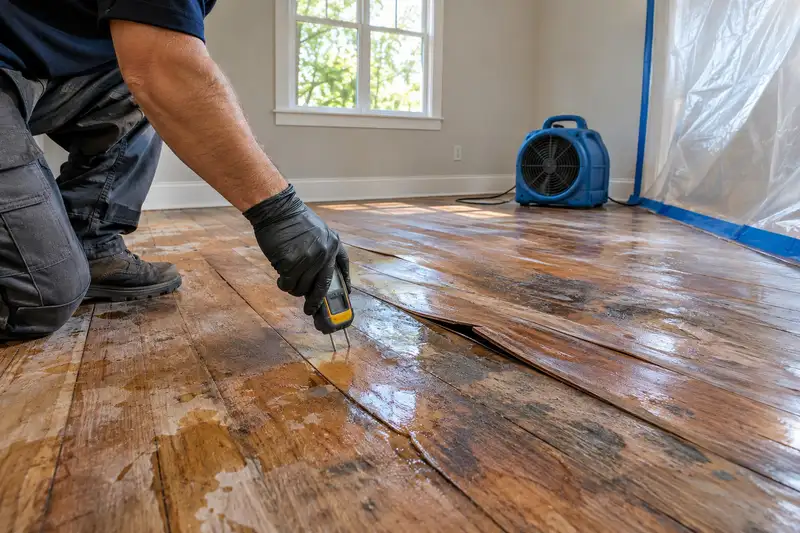
- Inspection and moisture mapping. A technician finds where the water came from, checks that it has stopped, and uses a moisture meter (and sometimes a thermal camera) to trace how far the water traveled. Water moves sideways under flooring and up inside walls, so the wet area is nearly always larger than the puddle.
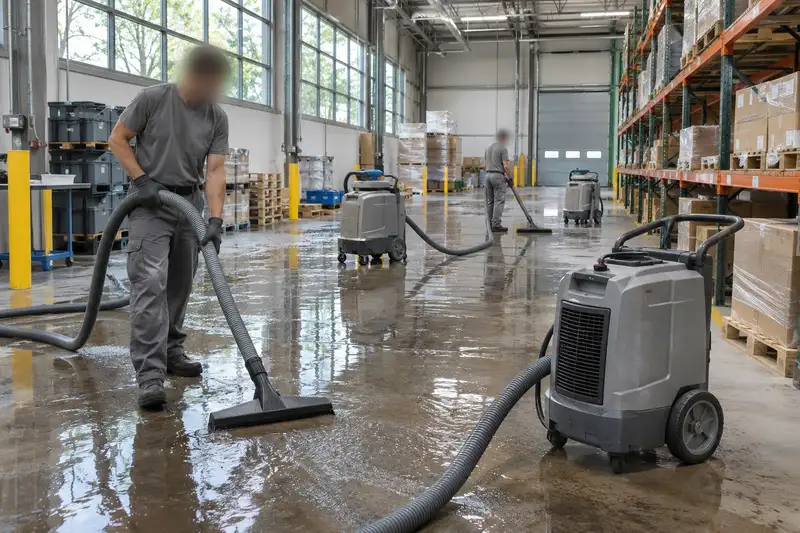
- Water extraction. Standing water and water held in carpet are pulled out with pumps and truck-mounted or portable extractors. This step removes far more water, far faster, than any amount of fan drying.
- Removing what cannot be dried. Soaked carpet pad, swollen particle board, wet insulation and drywall that has absorbed contaminated water generally come out. Baseboards are often pulled so air can reach the bottom of the wall.
- Structural drying. Air movers push dry air across wet surfaces while dehumidifiers pull the moisture out of the air. Equipment runs around the clock, and readings should be logged at each visit.
- Cleaning and sanitizing. Surfaces touched by the water are cleaned. If the water was not clean, this step is much more involved.
- Repairs. New drywall, paint, flooring and trim. Some restoration companies handle rebuilding themselves and some hand it to another contractor. Ask which applies before you sign.
How long drying takes in Gulf Coast humidity
Baytown sits on the upper Texas coast beside Galveston Bay and the Houston Ship Channel. For much of the year the outdoor air is warm and already loaded with moisture. That affects drying in two ways.
First, the old advice to open every window does not hold here on most days. Humid outside air cannot absorb much more water, so letting it in can leave materials wetter for longer. Restoration crews in this region normally close the house, run the air conditioning if it is safe to do so, and rely on dehumidifiers to create dry air indoors.
Second, anything that stays damp is at higher risk. The EPA advises drying water-damaged areas and items within 24 to 48 hours to prevent mold growth. Warm, humid conditions give mold what it needs, which is why a slow start costs more here than it might in a dry climate.
We will not quote a fixed number of days, because nobody can honestly promise one before measuring. As a general guide, drying is measured in days: a small clean-water leak caught early is at the short end, and a house that sat wet through a weekend, or one with wet wall cavities and hardwood, is at the long end. The right finish line is a moisture reading that matches the dry parts of the house, not a date on a calendar.
What kind of water is it?
The restoration industry sorts water into three categories, described in the ANSI/IICRC S500 standard for water damage restoration. The category decides how much can be saved.
| Category | Typical source | What it means for you |
|---|---|---|
| 1: clean water | Broken supply line, leaking water heater tank, overflowing sink with no contaminants | Lowest risk. Materials can often be dried in place if work starts quickly. |
| 2: gray water | Washing machine or dishwasher discharge, aquarium, toilet overflow with urine only | Can cause illness. Carpet pad is usually removed and surfaces need cleaning. |
| 3: black water | Sewage backup, rising floodwater, storm surge | Unsafe to touch. Porous materials that got wet are normally removed. Leave this to professionals. |
Clean water does not stay clean. Left sitting in a warm house, Category 1 water degrades, which is one more reason not to wait.
Safety before cleanup
- If water is near outlets, power strips or the breaker panel, stay out of the wet area and have the power shut off before anyone walks in. The National Weather Service warns that the electrical system should be off, and wiring checked by the power company or a qualified electrician, before a flood-damaged building is used again.
- A ceiling that is bulging with water can come down. Keep people out from under it.
- The EPA says damage caused by sewage or other contaminated water should be handled by a professional with experience in that kind of cleanup. Keep children and pets away.
Common causes of water damage in Baytown homes
- Supply lines and fittings. Braided hoses on toilets, sinks, ice makers and washing machines fail without warning. See our page on burst pipes and appliance leaks.
- Water heaters. Tanks in garages, attics and hall closets rust through at the bottom. An attic unit can soak a ceiling before anyone notices.
- Air conditioning condensate. Air conditioners here run most of the year and remove a lot of water from the air. A clogged drain line or a rusted pan under an attic air handler is a frequent source of ceiling stains.
- Slab leaks. Many Baytown houses sit on concrete slab foundations with plumbing run beneath or through the slab. A leak there may show up as a warm spot on the floor, damp flooring or an unexplained water bill.
- Roof and wind-driven rain. Thunderstorms and tropical systems push water past flashing, vents and damaged shingles.
- Rising water. Street flooding and storm surge are a different situation with different insurance rules. That is covered on our flood and storm cleanup page.
Questions to ask the company you are connected with
You are hiring them, so interview them. A good company answers these without getting defensive.
- Can you send proof of general liability insurance, and workers' compensation or an equivalent, before work starts?
- Do your technicians hold water damage training certificates, such as IICRC Water Damage Restoration Technician? Can I see them?
- Will I get a written scope of work and price before you begin, and written change orders if it grows?
- How often will you take moisture readings, and can I see the log?
- If mold is found, who handles it? In Texas, mold remediation above a small size threshold requires a state license. Our mold page explains the rules.
- Do you do the rebuild, or only the drying?
Our guide to choosing a restoration company goes through each of these in more detail.
Insurance, briefly
According to the Texas Department of Insurance, most homeowner and renter policies cover sudden and accidental water damage such as a burst pipe or broken washer hose, and usually do not cover gradual leaks or flooding. Every policy is different, and only your insurer can tell you what yours covers. Take photos and video before anything is moved, keep damaged items until the adjuster has seen them, and save receipts. We cover this step by step in our insurance claim tips.
Common questions
How long does it take to dry out a water-damaged room in Baytown?
Expect days, not hours. A room with wet carpet and drywall usually needs several days of continuous drying with air movers and dehumidifiers, and Baytown humidity can stretch that out if the house is not kept closed up. The company doing the work should take moisture readings each visit and tell you where things stand.
Can I dry it myself with box fans and open windows?
For a small clean-water spill on a hard floor, yes. For soaked carpet pad, wet drywall or water that reached wall cavities, household fans rarely pull enough moisture out, and opening windows on a humid Gulf Coast day brings more moisture in. If the water came from a sewer line or a flood, do not handle it yourself.
Will the drywall and flooring have to be torn out?
Not always. Drywall that got wet from clean water and is dried quickly can often stay, while drywall that wicked up contaminated water or sat wet for days is usually cut out. Carpet pad is commonly replaced, and solid hardwood sometimes can be saved with slow drying. Ask the technician to show you the moisture readings behind each decision.
Do I call my insurance company or a restoration company first?
Stop the water first, then make both calls the same day. The Texas Department of Insurance advises reporting the damage as soon as possible and taking photos before repairs, and it also expects you to take reasonable steps to keep the damage from getting worse. Getting drying started and filing the claim are not in conflict.