Key takeaways
- Shut off the water at the main valve or the meter before anything else.
- Burst pipe repair and water damage cleanup are two jobs: a licensed plumber fixes the pipe, a restoration company dries the house.
- Baytown pipes fail in hard freezes, but far more often it is a supply hose, water heater or slab leak on an ordinary day.
- Calling our line connects you with an independent local restoration company. We do not do plumbing or cleanup ourselves.
Burst pipe water damage in Baytown tends to arrive in one of two ways: all at once during a rare hard freeze, when half the street has the same problem, or quietly on a normal weekday when a hose behind the washing machine lets go. Either way the first ten minutes matter most. This page covers those minutes, then the repair and cleanup that follow.
First steps for burst pipe water damage in Baytown homes
- Shut off the water. Use the fixture valve if the leak is at a toilet, sink or appliance. Otherwise close the main valve at the house or at the meter box near the street.
- Cut power to wet areas if you can do it safely. If water is near outlets, cords or the breaker panel, or you would have to stand in water to reach the panel, stay back and call your electric utility or an electrician.
- Open a faucet at the lowest point of the house to drain what is left in the lines and take pressure off the break.
- If the water heater is the source, close the cold water valve above the tank and turn off the gas control or the breaker for the heater.
- Take photos and video of the break, the water and everything it touched before you move things.
- Move what you can. Lift furniture legs onto blocks or foil, pick up rugs, and carry electronics, papers and valuables to a dry room.
- Watch the ceiling. A sagging, bulging ceiling is holding water and can fall. Keep everyone out from under it.
- Call a licensed plumber for the pipe and a restoration company for the water. Then call your insurer.
What our number does: it routes you to an independent restoration company for water removal and drying. That company may or may not have a plumber on staff. Ask when you are connected.
Why pipes burst here
Hard freezes
Baytown winters are mild, and that is the problem. Houses on the upper Texas coast are built for heat. Water lines often run through vented attics, exterior walls and garages with little insulation, because most years it does not matter.
Then a year comes when it does. During the February 2021 winter outbreak, the National Weather Service recorded 13°F in Houston, issued hard freeze warnings across the region for days, and described widespread power outages, loss of heat and broken pipes. With no power, homes could not be heated, pipes froze, and many split. The flooding started when things thawed and water began to flow again.
Before a forecast hard freeze, the Red Cross recommends letting cold water drip from faucets served by exposed pipes, since moving water is harder to freeze. Other common steps are opening cabinet doors under sinks on outside walls, disconnecting garden hoses and covering outdoor faucets. If you will be away, or the power is out and the house is getting cold, shutting off the main and draining the lines removes the risk altogether.
Supply hoses and fittings
The flexible lines that feed toilets, faucets, ice makers, dishwashers and washing machines are under full pressure all day. Rubber washing machine hoses and plastic toilet supply nuts are frequent failures. Because a failed supply line runs until someone shuts it off, a break that happens while the family is at work or on vacation can soak several rooms.
Water heaters
Tank water heaters corrode from the inside and usually leak from the bottom. In many Baytown homes the heater sits in a garage, a hallway closet or the attic. An attic tank without a working drain pan can release its contents through the ceiling below.
Slab leaks
A large share of houses in this area are built on concrete slab foundations, with water lines running under or through the concrete. The clay soils common along the Texas Gulf Coast swell when wet and shrink when dry, and that movement can stress pipes over the years. A slab leak rarely looks like a burst pipe. Signs include:
- A water bill that climbs without explanation
- The sound of running water when every fixture is off
- A warm area on a tile or concrete floor (a hot water line)
- Damp carpet, cupping wood floors or loose tiles with no obvious source
- The water meter dial turning while nothing in the house is using water
Finding and repairing a slab leak is plumbing work, often with leak detection equipment. The flooring and any wet walls still need to be dried afterward, and because slab leaks go unnoticed for a long time, mold is a common companion. See mold after water damage.
Older piping
Baytown has housing from every decade since the oil boom, and older houses may still have galvanized steel supply lines or cast iron drains that have reached the end of their life. If you have had more than one leak in an older home, ask a licensed plumber whether repiping makes more sense than another patch.
Burst pipe repair and cleanup: who does what
| Task | Who handles it | Worth knowing |
|---|---|---|
| Fixing or replacing the pipe, hose or water heater | Licensed plumber | Plumbers in Texas are licensed by the Texas State Board of Plumbing Examiners. Ask for the license number. |
| Extracting water, drying floors and walls | Restoration company | The sooner this starts, the more can be saved. The EPA advises drying within 24 to 48 hours to prevent mold growth. |
| Checking wet wiring, outlets or the panel | Licensed electrician | Do not restore power to circuits that got wet until they are checked. |
| Replacing drywall, flooring, cabinets | Restoration company or a general contractor | Wait for dry moisture readings before closing walls back up. |
| Deciding what the policy pays | Your insurance company | No contractor can promise you coverage. |
What drying looks like after a pipe break
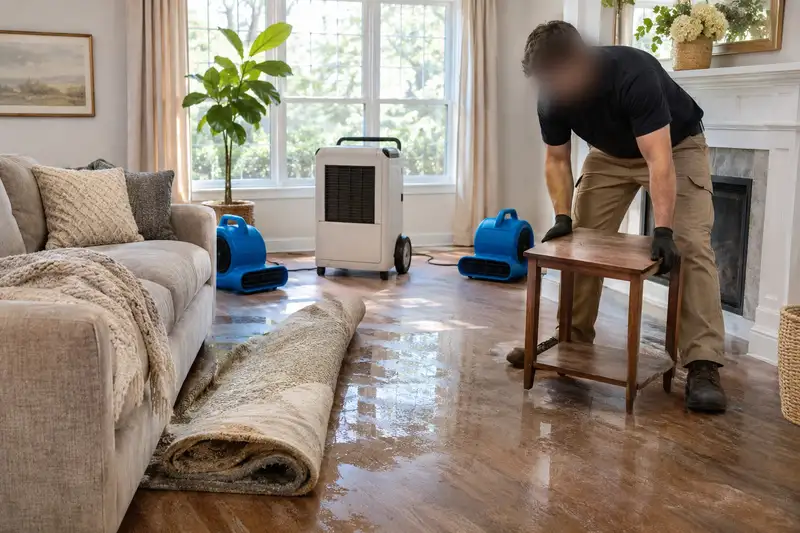
Water from a clean supply line is the easiest kind to deal with if it is caught early. The restoration company will extract standing water, lift or remove carpet and pad as needed, pull baseboards, and set air movers and dehumidifiers. Wet insulation in walls or the attic usually has to come out, because it holds water against the framing.
In our humid climate, crews normally dry with the house closed and dehumidifiers running, and they should check moisture levels on each visit. The full process is laid out on our water damage restoration page.
Insurance notes for pipe breaks
The Texas Department of Insurance describes burst pipes and broken washer hoses as examples of the sudden, accidental water damage that most home policies cover, while damage from slow leaks and seepage is usually excluded. That distinction is why documentation matters: photos of the failed part, the date you found it, and a plumber's invoice describing the cause all help show what happened. Keep the broken part if you can. Our claim tips page has a checklist. We are not insurance professionals and cannot tell you what your policy will pay.
Common questions
Who do I call first for a burst pipe, a plumber or a restoration company?
Shut the water off yourself first, then you will usually need both. A licensed plumber repairs the pipe, and a restoration company removes the water and dries the house. If water is still running and you cannot find the shutoff, the plumber or your water utility comes first.
Where is the main water shutoff in a Baytown house?
Most often it is in a ground-level box near the street or sidewalk, next to the water meter. Some houses also have a shutoff valve where the water line enters the house, often on an outside wall or in the garage. Find yours before you need it, and keep a meter key or adjustable wrench where you can reach it.
Is burst pipe water damage covered by homeowners insurance in Texas?
Often yes, but it depends on your policy. The Texas Department of Insurance says most homeowner and renter policies cover sudden and accidental water damage, with a burst pipe given as an example, and usually do not cover damage from gradual leaks. Your insurer decides what applies to your claim.
A pipe froze but has not burst. What should I do?
Open the faucet it feeds and warm the pipe gently. The American Red Cross suggests an electric heating pad, a hair dryer, a portable space heater kept away from anything flammable, or towels soaked in hot water, and warns against a blowtorch or any open flame. If you cannot find or reach the frozen section, call a licensed plumber.