Key takeaways
- Do not go back inside until the fire department says the building is safe.
- Fire damage restoration in Baytown usually covers four problems at once: burned materials, soot, smoke odor and water from firefighting.
- Soot is acidic and keeps damaging surfaces after the fire is out, so early cleanup limits loss. Wiping it yourself often makes staining worse.
- We are a referral line. The number on this page routes you to an independent local restoration company that does the work.
A house fire leaves more behind than the burned area. If you need fire damage restoration in Baytown, you are likely dealing with soot in rooms the flames never reached, a sharp smell in every closet, and floors wet from the fire hoses. This page walks through what happens next, what you should leave alone, and how the phone line on this page can put you in touch with a local restoration company.
Who you are calling: Baytown Fire and Water Restoration does not employ cleanup crews. We route your call to an independent restoration company in the area. They assess the damage and give you their own estimate.
First, safety
- Stay out until cleared. The Red Cross says to stay out of fire-damaged homes until local fire authorities say it is safe to re-enter. Fire can weaken roofs, floors and stairs in ways you cannot see.
- Leave utilities off. If the fire department shut off gas, power or water, do not turn them back on yourself. Have the utility or a licensed professional do it.
- Throw out exposed food and medicine. The Red Cross advises discarding food that has been exposed to heat, smoke or soot.
- Do not run the HVAC system. It can pull soot through the ductwork into clean rooms.
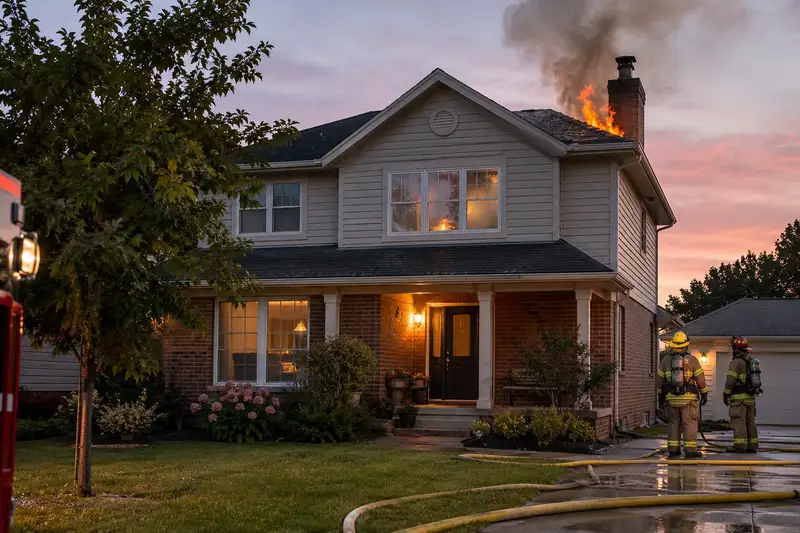
What fire damage restoration in Baytown covers
People often expect a fire job to be about charred wood. In practice the burned material is the simplest part. Most of the labor goes into four things.
1. Securing the property
Broken windows, a hole cut in the roof for ventilation, a door forced open by firefighters. These openings get boarded and tarped to keep out rain and trespassers. In Baytown, where a thunderstorm can arrive on short notice in any season, an untarped roof can turn a fire claim into a fire and water claim overnight. Insurers generally expect you to take reasonable steps like this to prevent further damage.
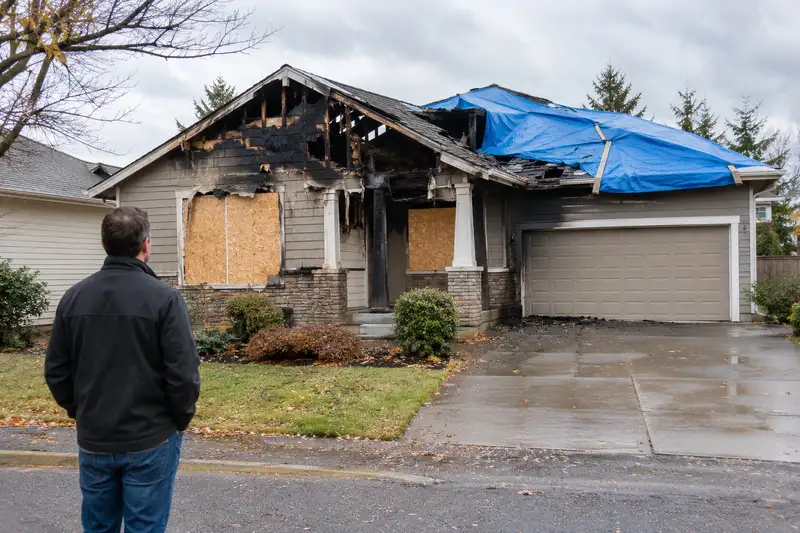
2. Water from firefighting
Putting out a fire takes a lot of water, and it ends up in carpet, subfloor, wall cavities and the rooms below. It needs the same extraction and drying as any other water loss, and it needs it quickly. The EPA advises drying wet materials within 24 to 48 hours to prevent mold growth, and a closed-up, smoke-damaged house in Gulf Coast humidity is a good environment for mold. Our water damage restoration page explains the drying process.
3. Soot and smoke residue
Soot is the fine black residue of incomplete burning. It is often acidic, and it keeps working on surfaces after the fire is out: metal fixtures tarnish and pit, plastics and appliances yellow, and porous stone and grout stain. That is why restoration companies treat soot removal as time sensitive.
Not all smoke residue behaves the same way, and the cleaning method depends on what burned:
- Dry smoke from fast, hot fires in paper and wood leaves a powdery residue that is the easiest to remove.
- Wet smoke from slow, smoldering fires in plastics and rubber leaves a sticky, smeary film with a strong odor.
- Protein residue from burned food is nearly invisible but discolors paint and carries a stubborn smell. A kitchen fire that looked minor can leave odor through the whole house.
- Fuel oil soot from a furnace malfunction is less common in Baytown homes, which mostly heat with gas or electric systems.
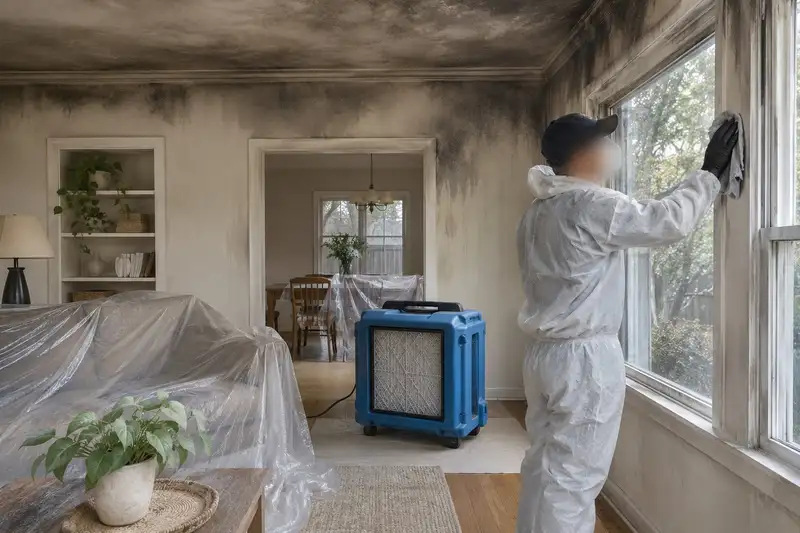
4. Odor
Smoke odor comes from residue that has settled into porous materials. Removing it means removing or cleaning those materials: washing walls and ceilings, cleaning or replacing insulation, cleaning ductwork, laundering or dry cleaning fabrics, and sealing surfaces that cannot be fully cleaned before repainting. Companies may also use equipment such as air scrubbers with carbon filters, thermal fogging, hydroxyl generators or ozone. Ozone treatment in particular should only be done in an unoccupied home, with people, pets and plants out. Ask the company what method they plan to use and why.
What you can do, and what to leave alone
| Reasonable to do yourself | Better left to the restoration company |
|---|---|
| Photograph and video every room before anything is moved | Wiping soot from walls, ceilings and woodwork |
| Retrieve documents, medication and valuables once the building is cleared | Cleaning soot from electronics and appliances, or switching them on to test them |
| Open windows for ventilation in dry weather if the fire department says the structure is sound | Cleaning carpet and upholstered furniture |
| Start a list of damaged belongings for the insurance claim | Anything involving the electrical system, gas lines or damaged structure |
| Keep receipts for hotel, meals and emergency purchases | Washing smoke-damaged clothing in a home machine, which can set the odor |
The U.S. Fire Administration publishes a plain guide called After the Fire: Returning to Normal. It covers the first 24 hours, insurance, replacing documents and salvage, and it is worth ten minutes of your time.
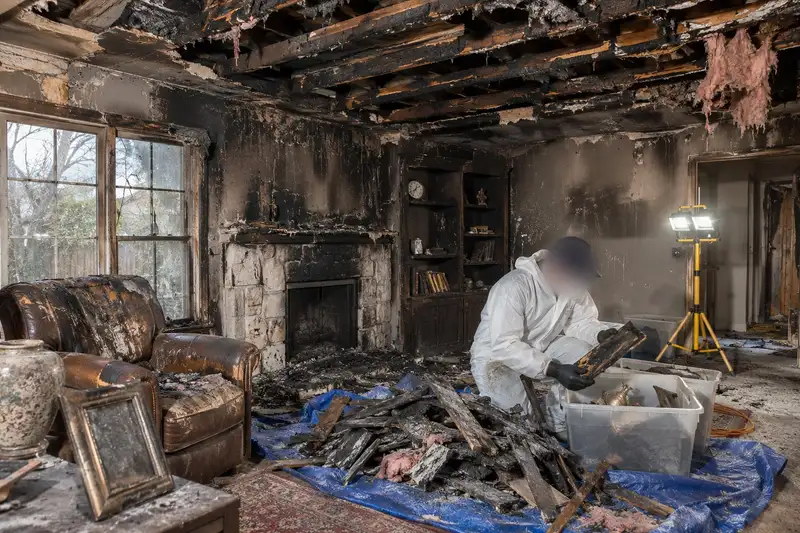
How long does fire restoration take?
It depends on how far the smoke traveled and how much has to be rebuilt, and no one can give you an honest timeline before an inspection. A contained kitchen fire with smoke in a few rooms is a cleaning and repainting job. A fire that reached the attic or framing involves demolition, permits, structural repair and a longer rebuild. Ask the company for a written schedule with the cleaning phase and the reconstruction phase listed separately, and ask what could change it.
Insurance and paperwork after a fire
- Call your insurer or agent as soon as you can and ask how they want the claim documented.
- Ask the fire department how to get a copy of the fire report. Your insurer may want it.
- Do not throw away damaged items until the adjuster has seen them or told you in writing that you may.
- Ask whether your policy pays for temporary housing while the home cannot be lived in, and keep those receipts.
- Get the restoration scope and price in writing. Read anything you are asked to sign, including forms that let the contractor bill your insurer directly.
The Texas Department of Insurance explains claim deadlines and what to do if you disagree with a payment. We summarize the general process in our insurance claim tips, which apply to fire claims in broad terms too. Nothing on this site is insurance advice.
Vetting a fire restoration company
Fires attract contractors who monitor emergency calls and arrive uninvited. Some are legitimate and some are not. Take a breath before you sign with anyone, including a company you reach through us. Ask for proof of insurance, ask whether technicians hold fire and smoke restoration training such as the IICRC Fire and Smoke Damage Restoration Technician certificate, and ask for references from recent local jobs. Our guide to choosing a restoration company in Baytown lists the red flags.
Common questions
Is it safe to stay in the house after a small fire?
Only after the fire department says so. The American Red Cross advises staying out of a fire-damaged home until local fire authorities say it is safe to re-enter. Even then, lingering smoke odor and soot can irritate lungs, so people with asthma, small children and older adults may be better off elsewhere until cleanup is done.
Can I wipe soot off the walls myself?
Usually it is better not to. Wiping soot with a wet rag or household cleaner tends to smear it into paint and drywall and can set the stain. Restoration crews normally remove loose soot dry first, with special sponges and filtered vacuums, and only then wash surfaces.
Will the smoke smell go away on its own?
Rarely, if the fire was more than a scorched pan. Smoke particles settle into drywall, insulation, carpet, clothing and ductwork, and warm humid weather tends to bring the smell back. Lasting odor removal means cleaning or removing the materials that hold the residue, and air fresheners only cover it for a while.
Does homeowners insurance cover fire and smoke damage?
Fire is one of the basic perils most homeowners policies are written to cover, but your own policy sets the terms, limits and deductible. Call your insurer or agent promptly, ask what is covered including temporary living costs, and keep receipts. We cannot tell you what your policy covers.