Key takeaways
- Treat all floodwater as contaminated. Keep children and pets out of it and out of rooms it touched.
- Do not re-enter until authorities give the all clear, and make sure the power is off before stepping into a wet house.
- Flood damage is usually not covered by homeowners insurance. A separate flood policy is what pays for rising water.
- After a major storm, restoration companies are stretched thin. Our line routes you to an available independent company, but we cannot promise how quickly one can reach you.
Flood cleanup in Baytown is something a lot of households here have already been through at least once. The city sits low, between the San Jacinto River, Galveston Bay and Cedar Bayou, with Goose Creek running through the middle of it. Water can arrive from the sky, from the bayous or from the bay. This page explains how flood cleanup differs from an ordinary water loss, what is safe to do yourself, and how insurance usually treats it.
Why Baytown floods
- Tropical rain. Atlantic hurricane season runs from June 1 through November 30. Slow-moving tropical systems can drop extreme rainfall. During Hurricane Harvey in 2017, National Weather Service gauges near Baytown recorded about 43 inches of rain.
- Storm surge. A hurricane pushing water up Galveston Bay and the Houston Ship Channel raises water levels along the Baytown shoreline. Hurricane Ike in 2008 brought surge and high wind that damaged homes and the marina here.
- Ordinary heavy rain. You do not need a named storm. A stalled line of thunderstorms can overwhelm street drainage in an afternoon, especially in older, flatter neighborhoods.
- Subsidence. Parts of the Baytown shoreline sank over the last century. The former Brownwood subdivision flooded so often that it was eventually bought out and is now the Baytown Nature Center.
Safety comes before cleanup
- Wait for the all clear. The National Weather Service says not to enter a flood-damaged building until authorities say it is safe.
- Electricity. Make sure the electrical system is off before you go in, and have the power company or a qualified electrician deal with wiring. Never touch electrical equipment while standing in water.
- Gas. If you smell gas or hear hissing, leave and call the gas utility from outside.
- Contamination. The Weather Service notes that floodwater often becomes contaminated with sewage or chemicals. Wear rubber boots, gloves and eye protection, and wash well afterward.
- Carbon monoxide. Never run a portable generator inside the home or garage. The Weather Service calls carbon monoxide poisoning one of the leading causes of death after storms when power is out.
- Structure and wildlife. Floors and ceilings can give way, and snakes, fire ants and other animals shelter in flooded houses.
How flood cleanup in Baytown differs from a pipe leak
The restoration industry's water damage standard, ANSI/IICRC S500, groups water into three categories. They explain why a flooded house is handled so differently from one with a broken supply line.
| Category | Description | Examples |
|---|---|---|
| Category 1 | Water from a sanitary source | Broken supply line, tub or sink overflow with clean water, rain entering directly through a roof opening |
| Category 2 | Significantly contaminated water that can cause discomfort or sickness | Dishwasher or washing machine discharge, aquarium water |
| Category 3 | Grossly contaminated water that may carry pathogens or toxins | Sewage, rising water from bayous, rivers and streets, storm surge from the bay |
Floodwater that came across the ground is Category 3 by the time it reaches your living room. It has picked up whatever was in the soil, the storm drains and the neighbors' garages. That drives most of the decisions in a flood job:
- Porous materials are removed, not dried. Carpet, pad, upholstered furniture, mattresses, insulation and drywall that got wet are normally thrown out.
- Walls are cut above the water line. Drywall wicks water upward, so crews usually cut it out some distance above the visible line and remove wet insulation behind it.
- Remaining structure is cleaned and disinfected before drying equipment goes in, so contamination is not blown around the house.
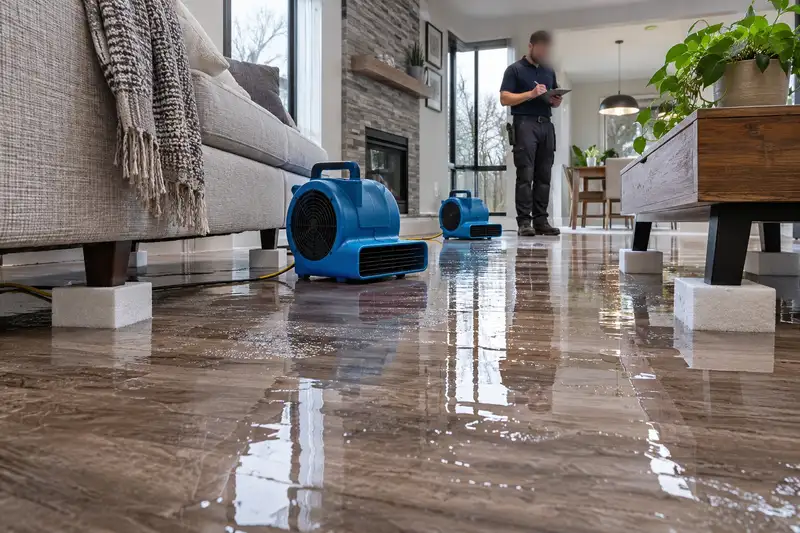
- Drying takes longer. Framing and slab that sat under water for a day or more hold a lot of moisture, and after a tropical system the outdoor air is saturated too.
What you can do while you wait for help
After a regional flood every restoration company is booked, and waiting several days for a crew is common. If the house is safe to enter, these steps limit the damage in the meantime:
- Photograph and video everything first, including the water line on the walls and the serial numbers of ruined appliances.
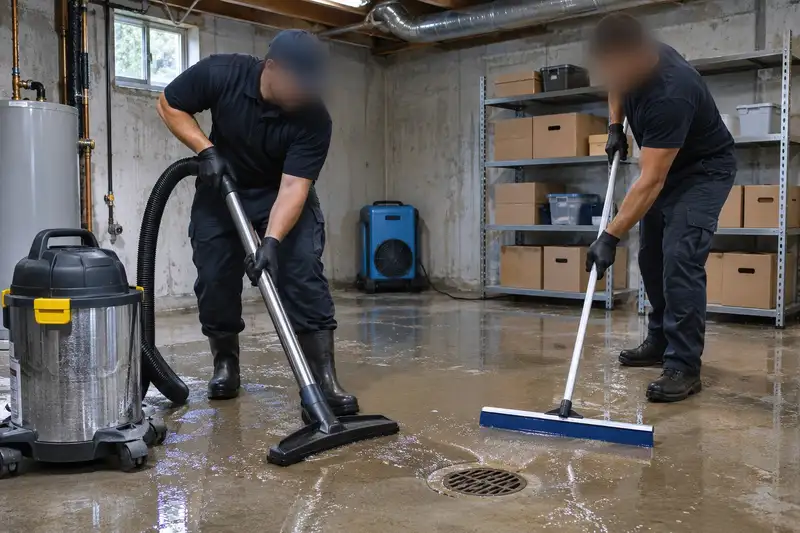
- Get standing water and wet items out. Carry soaked carpet, pad and furniture outside.
- If you have power or a generator running safely outdoors, run fans and dehumidifiers. The EPA advises drying wet materials within 24 to 48 hours where possible to prevent mold growth.
- Keep a sample of removed carpet and flooring, and do not discard major items until your adjuster has seen them or approved it.
- Do not run the central air system if the ducts or air handler were under water. The EPA warns that a contaminated HVAC system can spread mold through the building.
The EPA's guide to mold cleanup after disasters recommends at least an N-95 respirator, goggles and protective gloves for this kind of work. If anyone in the home has asthma, a weakened immune system or a breathing condition, they should not take part.
Flood insurance is usually a separate policy
This catches people every storm. According to FloodSmart, the official site of the National Flood Insurance Program, most homeowners insurance does not cover flood damage. Flood coverage comes from a separate policy, either through the NFIP or a private flood insurer.
- Rising water from outside is a flood claim under a flood policy.
- Rain that enters through storm-damaged roofing or windows is typically handled under a homeowners or windstorm policy. Along the Texas coast, wind and hail coverage is sometimes written separately from the main home policy.
- A storm can produce both, which means two claims, possibly two adjusters, and a need to document which damage came from which cause.
New flood policies normally take effect 30 days after purchase, FloodSmart notes, with limited exceptions. If you do not have flood coverage, your agent can explain your options, and after a federally declared disaster, FEMA assistance may be available. Policies vary, and nothing here is insurance advice. Our insurance claim tips cover documentation in more depth.
After the storm: be careful who you hire
Major storms draw contractors from all over the country. Many are honest and badly needed, and some are not. The Texas Department of Insurance advises getting written bids, never signing a contract with blank spaces, and being wary of large upfront payments. That applies to a company you reach through us as much as to anyone knocking on your door. We explain the checks in how to choose a restoration company.
Common questions
Does homeowners insurance cover flood damage in Baytown?
Usually not. FloodSmart, the National Flood Insurance Program website, states that most homeowners insurance does not cover flood damage, and the Texas Department of Insurance says the same about home policies. Rising water is covered by a separate flood policy, so check which policies you actually hold.
How soon can I go back into a flooded house?
Wait until local authorities say it is safe. The National Weather Service advises not entering a flood-damaged building until you are given the all clear, making sure the electrical system is off, and being very careful because water can cause floors to collapse and ceilings to fall.
Can flooded drywall and carpet be saved?
Generally no, when the water was floodwater. Rising water is treated as contaminated, so carpet, pad, insulation and the drywall it soaked are normally removed and thrown out. Solid wood framing, concrete and some hard surfaces can be cleaned, disinfected and dried.
Can I buy flood insurance when a storm is already in the Gulf?
You can buy it, but it will probably not be in force in time. FloodSmart says flood insurance coverage normally goes into effect 30 days after purchase, with a few exceptions. The time to buy is well before hurricane season.