Key takeaways
- Dry wet materials within 24 to 48 hours. According to the EPA, that prevents mold growth in most cases.
- Texas licenses mold assessors and remediators through TDLR. Most professional mold work requires a license, with an exemption for visible mold under 25 contiguous square feet.
- The company that assesses a mold problem may not also remediate it on the same project.
- We connect you with independent restoration companies. Before any mold work, verify the TDLR license of whoever will do it.
Mold after water damage is the problem Baytown homeowners worry about most, and with reason. Mold needs moisture, something to feed on and mild temperatures. A wet house on the upper Texas coast supplies all three. The good news is that mold is largely preventable if drying starts fast, and Texas has clearer consumer protections around mold work than most states.
Why mold after water damage is so common in Baytown
Mold spores are present in outdoor and indoor air everywhere. They only become a problem when they land on something damp. Paper-faced drywall, wood framing, carpet backing, cardboard boxes and dust all serve as food.
Local conditions make things harder:
- Humidity. Outdoor air here is humid for much of the year, so wet materials dry slowly unless the air is mechanically dried.
- Power outages. After a hurricane or a freeze the air conditioning may be off for days. A closed, wet, unconditioned house warms up and stays damp.
- Hidden water. Slab leaks, air conditioner drain problems and slow roof leaks can wet a wall cavity or subfloor for weeks before anyone sees a stain.
- Evacuations. When a storm forces people out, homes can sit wet until residents are allowed back.
The 24 to 48 hour window
The EPA's guidance is direct: when water leaks or spills occur indoors, act quickly. If wet or damp materials are dried within 24 to 48 hours, in most cases mold will not grow.
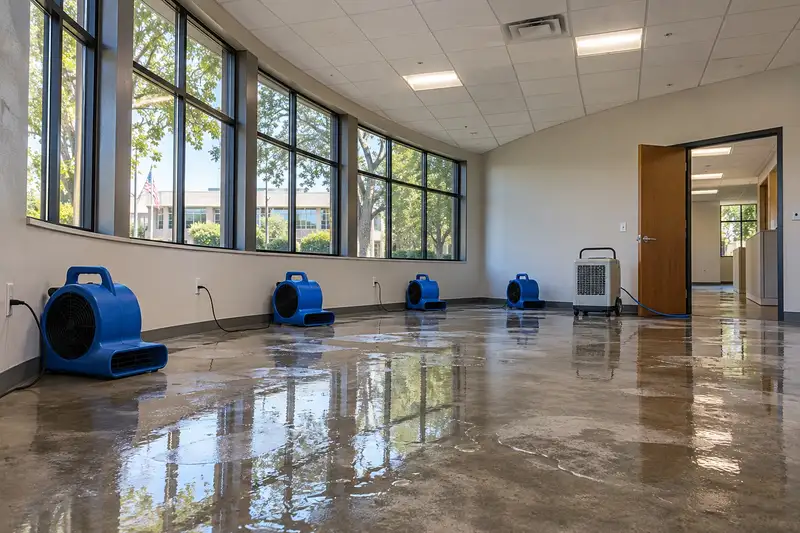
That is the reason restoration companies push to start extraction and drying the same day. It is also the reason to do what you safely can on your own while waiting: remove standing water, pull up wet rugs, move wet items out, and run fans and a dehumidifier. The drying process itself is described on our water damage restoration page.
Signs mold has already started
- A musty, earthy smell, especially when the air conditioning first comes on or when you open a closet or cabinet
- Spots or fuzzy growth on walls, ceilings, baseboards or the back of furniture, in black, green, white or gray
- Paint that bubbles or peels, or drywall that feels soft
- Staining that returns after cleaning
- Allergy-like symptoms that ease when you leave the house
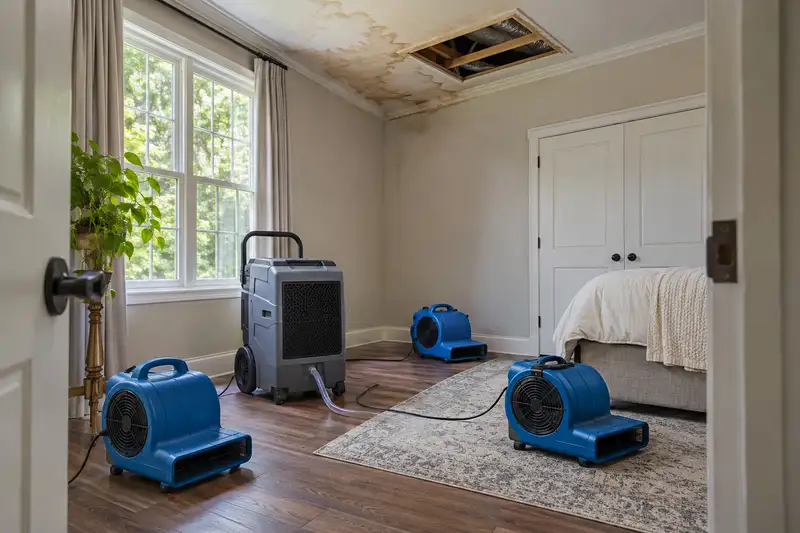
Visible mold is often the smaller part of the problem. Growth on the room side of a wall can mean more on the back of the drywall. The EPA cautions that investigating hidden mold can release spores, for example when wallpaper is peeled back, and suggests hiring an experienced professional if you suspect a hidden problem.
When you can clean it yourself, and when to call professionals
The EPA's rule of thumb: if the moldy area is less than about 10 square feet, roughly a 3 foot by 3 foot patch, in most cases you can handle the job yourself. It then lists situations where you should bring in help.
| Situation | What the EPA advises |
|---|---|
| Small patch on a hard surface, under about 10 square feet | Usually a do-it-yourself job. Scrub with detergent and water, dry completely, and fix the moisture source. |
| Large area, or a lot of water damage | Consult professional remediation guidance. In practice this means hiring a qualified contractor. |
| Water or mold caused by sewage or other contaminated water | Call a professional experienced in cleaning buildings damaged by contaminated water. |
| Mold suspected in the heating and cooling system | Do not run the system, since it could spread mold through the building. Get professional advice first. |
| Anyone in the home has health concerns | Consult a health professional before starting cleanup. |
If you do clean a small area yourself, the EPA recommends gloves, goggles and an N-95 respirator, and not touching mold with bare hands. Absorbent materials such as ceiling tiles and carpet may have to be thrown away if they become moldy.
Health questions belong with a doctor
Mold affects people differently, and people with asthma, allergies, lung conditions or weakened immune systems can be more sensitive. We are not medical professionals. If someone in your home is having symptoms, talk to a health care provider, and keep that person out of the affected area and away from cleanup.
Texas mold rules: what TDLR requires
Texas is one of the states that regulates mold work. The Texas Department of Licensing and Regulation (TDLR) runs the Mold Assessors and Remediators program. The points below are drawn from TDLR's published program information, checked on the date at the top of this page. Rules change, so confirm the current details with TDLR.
- Two separate license types. Mold assessment means inspecting a building and writing the plan (the protocol) for fixing a mold problem. Mold remediation means removing, cleaning or treating the mold. Companies and individuals doing either must be licensed by TDLR unless an exemption applies.
- No doing both on one project. A person or company may hold both licenses, but TDLR says they may not perform both assessment and remediation on the same project.
- The 25 square foot exemption. TDLR notes that in most instances, areas of visible mold of less than 25 contiguous square feet can be cleaned up by people who are not licensed.
- Owner exemption. Homeowners can, in some circumstances, do their own remediation under exemptions in the Texas Occupations Code.
- Consumer Mold Information Sheet. Licensed assessors and remediators must give you a copy of this TDLR document before any mold-related work begins.
- Certificate of Mold Damage Remediation. After a licensed remediation, you should receive this certificate. Only a licensed remediator is authorized to give one. The Texas Department of Insurance says mold professionals must provide a certificate that the mold was removed. Keep it with your house records, because it matters for insurance and for selling the home later.
TDLR itself does not inspect homes for mold and does not set a "safe" mold level. Its role is licensing and enforcing work standards. If you believe an unlicensed person is doing regulated mold work, you can file a complaint with TDLR.
How to check a license
- Ask the company for the name and TDLR license number of the mold remediation contractor or company, and of the assessment consultant if one is involved.
- Search them at the TDLR license search.
- Confirm the license type matches the work (assessment or remediation) and that it is current.
- Make sure the assessor and the remediator are not the same licensee on your job.
A water damage restoration company is not automatically a licensed mold remediator. Many are, and some are not. If the company you are connected with through our line finds mold beyond the exemption size, ask who holds the license. More on vetting in our guide to choosing a restoration company.
Mold and insurance in Texas
The Texas Department of Insurance explains that when mold develops on an item damaged by a covered, sudden water loss, it would be covered, while mold from gradual leaks, seepage or flooding generally is not covered by home policies. It also notes that most home policies do not include mold cleanup and testing after a damaged item is removed, though some insurers let you add that coverage. Read your policy and ask your agent. We cannot tell you what yours covers.
Common questions
How fast does mold grow after water damage?
It can start within a day or two. The EPA says that if wet or damp materials are dried within 24 to 48 hours of a leak or spill, in most cases mold will not grow, and the Texas Department of Insurance notes that mold can start growing within a day after a leak. Warm, humid Baytown weather does not slow it down.
Do I need a mold test before cleanup?
Usually not. The EPA says that in most cases, if visible mold growth is present, sampling is unnecessary, and the Texas Department of Licensing and Regulation notes that testing to identify the kind of mold is not required before remediation or cleaning. An assessment is different from a lab test and is often worthwhile on larger jobs.
Does a mold remediation company in Texas need a license?
Yes, in most cases. The Texas Department of Licensing and Regulation licenses mold assessors and mold remediators, and contractors doing that work must be licensed unless an exemption applies. One exemption covers areas of visible mold under 25 contiguous square feet. You can look up any license on the TDLR website.
Can the same company test for mold and remove it?
Not on the same project. TDLR states that a licensee is not allowed to conduct both mold assessment and mold remediation on the same project, with a narrow exception for school districts. The rule exists to prevent a conflict of interest.
Will bleach kill mold on drywall?
It will not solve the problem. Drywall and other porous materials with mold growing in them generally have to be removed, because mold grows into the material and not only on the surface. The underlying moisture also has to be fixed or the mold comes back.
Related pages
Sources
- U.S. EPA: A Brief Guide to Mold, Moisture and Your Home
- U.S. EPA: Mold Cleanup in Your Home
- Texas Department of Licensing and Regulation: Mold Assessors and Remediators
- TDLR: Mold program frequently asked questions
- TDLR: License search
- Texas Department of Insurance: When are water damage and mold covered by insurance?